Transport Phenomena

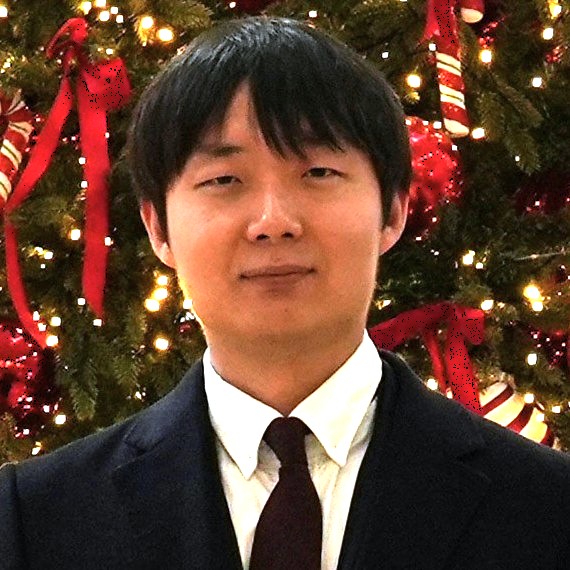
Haein Jung

A Multi-Paradigm Approach to Scientific Research

01 WHO the researcher
Haein Jung · 정해인

Transport phenomena across multiple research paradigms.

I am a postdoctoral researcher at Brown University studying transport phenomena through experiment, modeling, computation, data-driven methods, and emerging intelligent systems.

My work focuses on physical transport processes and on connecting different modes of scientific investigation rather than relying on a single methodological framework.

position Postdoctoral Researcher
institution Brown University
field Transport Phenomena
Haein Jung
Haein Jung
Brown University
02 WHY the objective

Complex transport systems are rarely understood through one method alone.

To reveal governing mechanisms and principles.

The objective is to connect direct observation, physical reasoning, mathematical models, numerical computation, and learned representations to better understand complex transport processes.

03 WHAT the physical domain
Physical domain

Transport Phenomena

My research concerns transport processes governed by the coupled movement of momentum, energy, and mass in fluid systems.

01

Momentum Transport

Fluid motion, pressure-driven dynamics, instabilities, and momentum exchange.

02

Energy Transport

Thermal transport, convection, and coupled energy exchange.

03

Mass Transport

Advection, diffusion, mixing, and transport between phases or species.

Research systems
PRIMARY SYSTEM
Boiling
Coupled momentum, energy, and mass transport in thermally driven two-phase flow.
PRIMARY

Boiling

Experimental and mechanistic investigation of two-phase transport, thermal behavior, and hydrodynamic instability.

EARLIER WORK

Mixing & Filtration

Chaotic advection, flow-driven mixing, and transport control in filtration systems.

04 HOW the methodological structure
Multi-Paradigm Approach

Five modes of scientific investigation.

The same physical system can be investigated through complementary paradigms, ranging from direct observation to mathematical description, numerical computation, learned representations, and intelligent reasoning.

01
OBSERVE

Experiment

Physical reality → measurement

Experiments Diagnostics
02
EXPLAIN

Theory

Observation → models

Mechanistic Models Scaling
03
SIMULATE

Computation

Equations → dynamics

CFD HPC
04
LEARN

Data

Evidence → learned representations

Neural Operators Generative Models
05
REASON

Intelligence

Knowledge → scientific decisions

Agents Scientific Reasoning
01–03

Classical approaches directly observe physical systems, construct governing descriptions, and calculate their consequences.

04

Data-driven approaches learn operators, representations, hidden states, and dynamical relationships from evidence.

05

Intelligence-driven approaches extend the workflow toward reasoning, tool use, evidence evaluation, and autonomous scientific decision-making.

05 WHERE the research environment
Current affiliation

Brown University

division Applied Mathematics
research environment CRUNCH Group
location Providence, Rhode Island
06 WHEN the research record
Research record

Continuously updated elsewhere.

Career history, publications, software, datasets, and research outputs are maintained through dedicated external profiles rather than duplicated on this website.